Who we are

The Human-Centered AI Lab brings together researchers, policymakers, and technologists across institutions.

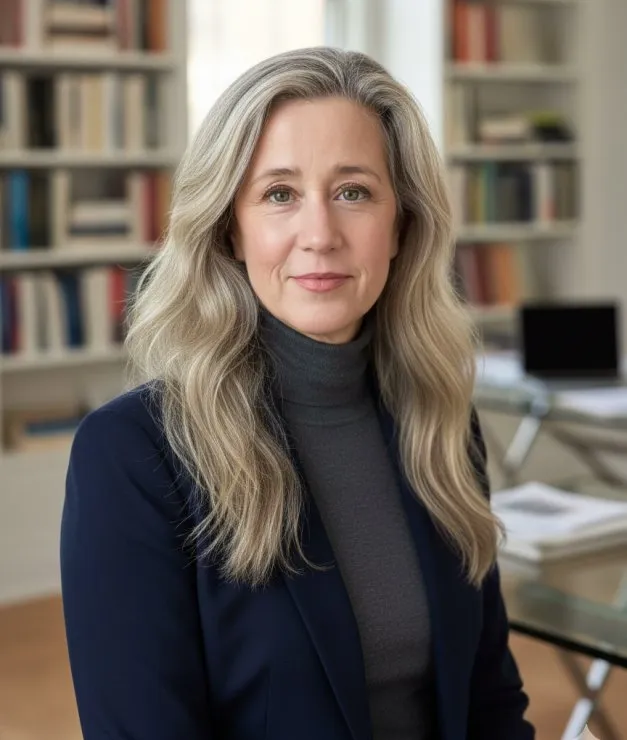
Katherine Elkins, Co-Founder and Principal Investigator, Human-Centered AI Lab

Katherine Elkins

Co-Founder · Principal Investigator

Co-Founder and Principal Investigator, Human-Centered AI Lab. AI safety researcher and Professor of Humanities at Kenyon College. Author, The Shapes of Stories (Cambridge UP, 2022) and Philosophical Approaches to Proust's In Search of Lost Time (OUP, 2022). Ph.D., UC Berkeley. Principal Investigator representing the Modern Language Association in the NIST US AI Safety Institute Consortium (CAISI). PI for Schmidt Sciences HAVI. Keynotes at OpenAI, UNESCO, Weill Cornell Medicine-Qatar, RALLY Innovation.

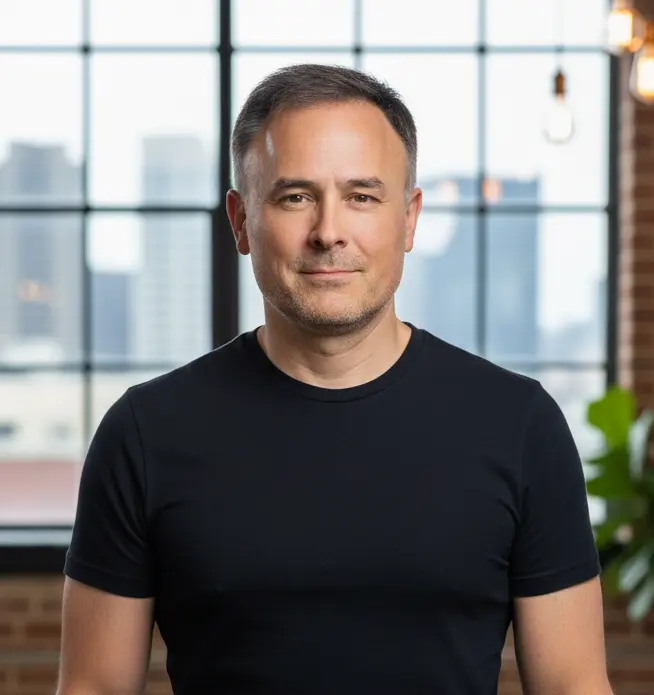
Jon Chun, Co-Founder, Director, and Principal Investigator, Human-Centered AI Lab

Jon Chun

Co-Founder · Director · Principal Investigator

Co-Founder, Director, and Principal Investigator, Human-Centered AI Lab. AI research scientist. Co-creator of the first human-centered AI curriculum. Created SentimentArcs, the first large-ensemble methodology for diachronic sentiment analysis. ICML 2024 oral presentation (top 2%). PI in the NIST US AI Safety Institute Consortium (CAISI) and for Schmidt Sciences HAVI. Co-founded SafeWeb ($26M acquisition by Symantec; first In-Q-Tel security investment). UC Berkeley EECS, UT Austin MS. Two US patents.

Frederika Pfeiffer

Board Member

Frederika Pfeiffer brings a rare combination of frontline AI research grounding and operational expertise in contracts, procurement, and project management to the HCAIL board. A graduate of Kenyon College with a B.A. in Sociology and Data Analytics (minor in English), she conducted interdisciplinary research in AI and big data through the Integrated Program in Humane Studies (IPHS), working across natural language processing, state-of-the-art models, and symbolic AI (GOFAI). That early exposure to human-centered approaches to AI directly connects her to HCAIL's mission.

Professionally, Frederika has built a career at the intersection of government, technology, and public service. She currently serves as a Contract Coordinator on the Capital Projects Street Trees Team at the NYC Parks Department. Previously, she was a Project Manager at the U.S. General Services Administration (GSA), where she rotated through the Chief of Staff Office in IT Products and the OASIS+ Contract Program Management division. In the private sector, she worked as a Business Operations Analyst and Contract Specialist at Carahsoft, developing expertise in contract management, data analysis, and process improvement. She holds a Google Project Management Certificate.

Frederika's commitment to public service runs throughout her career, including internships with Ohio Jobs and Family Services, Southeastern Ohio Legal Aid, and Child Protective Services. Her grounding in government contracting, procurement, compliance, and project execution gives HCAIL valuable governance and operational oversight as the organization develops its research initiatives and manages external partnerships and funding.

Raul Romero

Board Member

Raul Romero brings the perspective of an applied-AI builder to the HCAIL board, grounded in a Kenyon education that traces directly to the lab's intellectual roots. As an IPHS concentrator, he conducted natural language processing research with the AI CoLab, including a diachronic sentiment-analysis study of the Venezuelan opposition (2019–2021) that drew on more than 300,000 tweets to track shifting political sentiment over time — work published through Digital Kenyon. He graduated as a recipient of the College's International Studies Award.

Since Kenyon, Raul has built a career at the frontier of practical AI. He spent nearly four years at eBay, rising from Product Manager to Senior Product Manager on the company's fashion and AI initiatives, including its authenticity-guarantee and AI-powered shopping features. He is now co-founder of Kite ML, a robotics startup developing a development environment that makes training autonomous robots faster and more accessible, and is pursuing a Master's in Design Engineering jointly at Harvard's John A. Paulson School of Engineering and Applied Sciences and the Graduate School of Design. Earlier, he co-founded and led Yakera as CEO.

Raul's commitment to the public good runs throughout his record, from poverty-alleviation work with community foundations in Venezuela to his recognition at Kenyon with the International Studies Award and the Leopoldo López Award for advancing the cause of democracy. As a director, he offers HCAIL a builder's fluency in how AI systems are actually designed, shipped, and used, complementing the governance, research, and operational expertise the rest of the board provides.

Jennifer Siegel

Board Member

Jennifer Siegel brings scholarly authority in policy, statecraft, and the history of how institutions navigate uncertainty to the HCAIL board. She is the Bruce R. Kuniholm Distinguished Professor of History and Public Policy at Duke University's Sanford School of Public Policy, where she also holds an appointment as Professor of History in Trinity College of Arts & Sciences. Her research specializes in modern European diplomatic and military history, with a focus on the British and Russian Empires, and she has published extensively on intelligence history and the limits of intelligence in international society.

Her books include For Peace and Money: French and British Finance in the Service of Tsars and Commissars (Oxford University Press, 2014) and Endgame: Britain, Russia and the Final Struggle for Central Asia, which won the 2003 AAASS Barbara Jelavich Prize. She earned her B.A. from Yale University in 1990 and her Ph.D., also from Yale, in 1998, and taught for nearly two decades in the history department at Ohio State University before joining Duke in 2021.

Professor Siegel's expertise in intelligence, statecraft, and the governance of complex international systems gives HCAIL a distinctive vantage on the policy and oversight questions that increasingly define AI's place in society. As a director, she brings the judgment of a senior scholar accustomed to weighing institutional risk, evidence, and long time horizons, complementing the technical and operational expertise across the rest of the board.